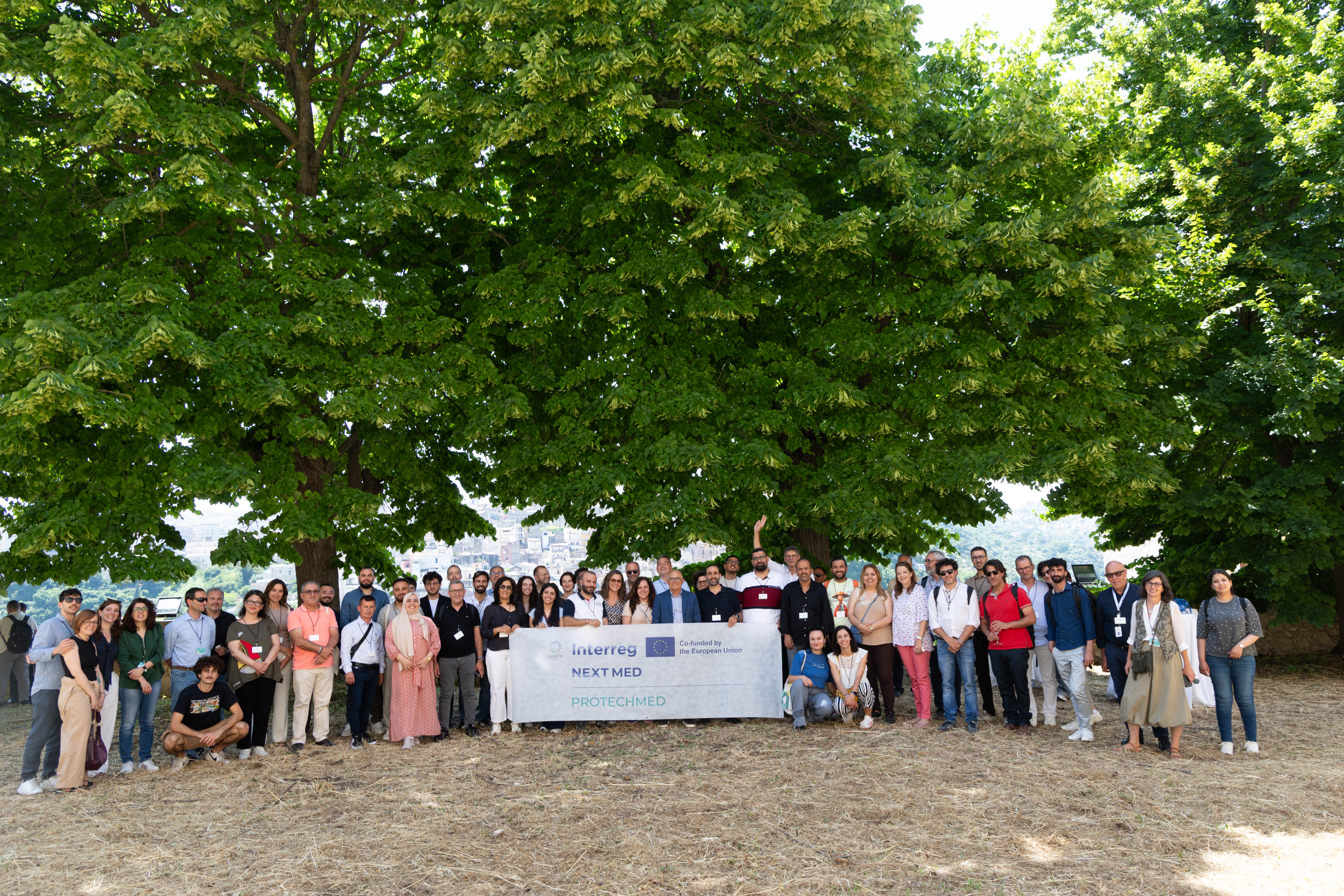
Six countries, one shared goal. Technicians, researchers and greenhouse-sector companies from Italy, Greece, Tunisia, Türkiye, Lebanon and Malta came together at the PROTECHMED Training Camp held in Sicily. The central question running through the discussions was how digital transformation in Mediterranean greenhouse farming could be extended to enterprises of different sizes and technological levels.
The camp's core conclusion was clear: innovation creates broader impact when it is affordable, practical and accessible. Digital transformation should not be limited to large, fully automated enterprises; it must also be adaptable to the existing infrastructure, needs and investment capacity of small and medium-sized greenhouse businesses.
This approach is now guiding the Turkish PROTECHMED pilot, led by Akdeniz University in Antalya. The pilot brings together scientific knowledge, grower experience and affordable technologies to explore how accessible digitalisation can be applied under real greenhouse conditions. 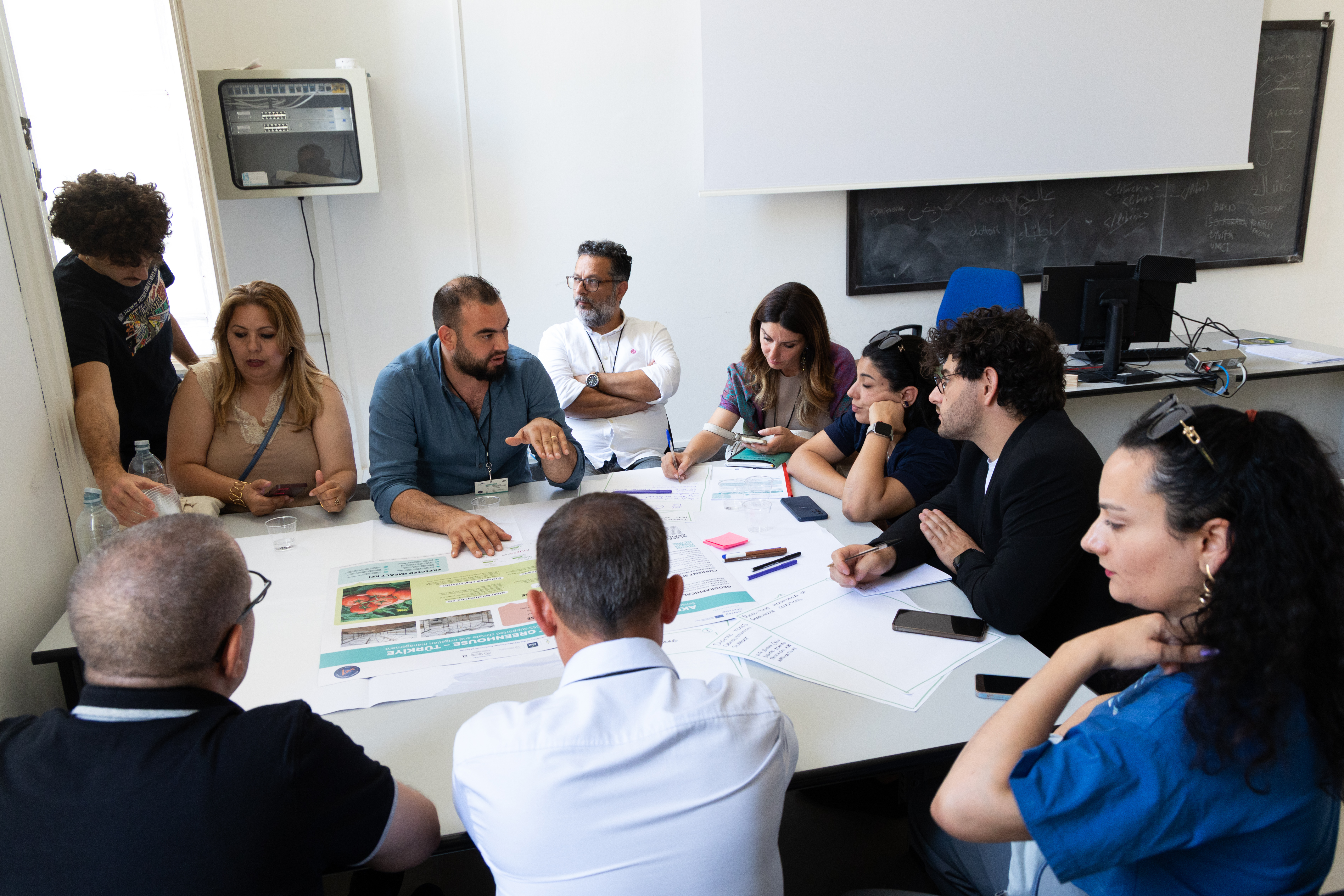
Why irrigation, and why now?
Antalya is one of the leading centres of protected cultivation in both Türkiye and the wider Mediterranean basin. The region offers a significant testing ground, with deep-rooted production experience, a developed agricultural value chain, technology providers and greenhouse enterprises of varying scales.
Alongside high-tech greenhouses in Türkiye that already use modern climate control and irrigation automation, a large number of enterprises still operate with more traditional infrastructure. Assoc. Prof. Dr. Cihan Karaca, of the Faculty of Agriculture at Akdeniz University, describes the landscape this way:
"More than 90 percent of greenhouse production in Türkiye still takes place in very low-technology greenhouses."
Rather than pointing to a shortcoming in Turkish greenhouse farming, this figure signals the considerable potential for scaling up digital solutions. Drip irrigation is already widely used across the country, and growers hold substantial field experience. The next step is to reinforce that existing know-how with real-time measurements and decision-support tools.
Grower experience remains an indispensable part of crop and irrigation management. At the same time, rapid changes in parameters such as solar radiation, temperature, humidity and root-zone moisture cannot always be identified in time through observation alone.
Data from sensors and climate-monitoring systems can help growers assess irrigation timing and quantity more precisely improving the efficient use of water, fertiliser and energy while reinforcing the grower's existing knowledge and experience rather than replacing it.
Discussions on precision irrigation and fertigation at the Sicily Camp supported this same approach. Participants stressed that irrigation and fertilisation decisions should be backed by real-time data, but that the systems used must remain affordable, understandable and practical for small and medium-sized enterprises.
Watch the interview with Assoc. Prof. Dr. Cihan Karaca: PROTECHMED Sicily Camp – Cihan Karaca Interview
A technology provider's perspective
Türkiye's contribution to the Sicily Camp also brought in the perspective of SMEs and technology providers active in the greenhouse sector. Ahmet Tezcan, of Sera Marketim, shared his field experience on developing and implementing greenhouse technologies in line with growers' needs.
This contribution added an important commercial and operational dimension to the pilot discussions. Growers do not always need the most complex or most advanced system on the market. What they actually need are technologies that solve a specific problem, work well with existing greenhouse infrastructure, and deliver a tangible contribution in terms of water, labour, energy or production efficiency.
This view aligns closely with the core conclusions reached at the Sicily Camp on technology accessibility: priority should go to affordable sensors, hardware that integrates easily into existing greenhouse systems, and applications suited to the everyday working conditions of small and medium-sized enterprises.
The goal is not to offer scaled-down versions of expensive systems designed for large operations. Solutions should instead be designed to be modular and scalable, taking into account each enterprise's existing infrastructure, technical capacity, investment possibilities and production needs.
Watch the interview with Ahmet Tezcan: PROTECHMED Sicily Camp – Interview with Ahmet Tezcan of Sera Marketim
Technology alone is not enough
The Sicily Camp also placed particular emphasis on the fact that digital transformation is not simply a matter of installing equipment.
The strong practical knowledge and long-standing greenhouse experience of growers in Türkiye represent a significant advantage for developing and validating new technologies. For digital tools to be successfully adopted, this field knowledge needs to be combined with technical training and ongoing support.
For this reason, capacity-building activities will be integrated into the Antalya pilot through PROTECHMED training, coaching and Living Lab activities involving growers, technicians and SMEs.
Feedback gathered from participants will help ensure that the system is evaluated not only on technical performance, but also on how understandable it is, how easy it is to use, its maintenance requirements, and its fit with real production conditions.
Through this approach, the Turkish pilot aims to develop a model that connects the country's strong greenhouse production experience with accessible digital technologies one whose results can also be transferred to other Mediterranean countries.
Son güncelleme : 27.07.2026 17:04:24